
Surfaces That Resist Algae Buildup
Fiberglass Pool Installation in Greer for homeowners wanting low-maintenance pool surfaces
Pre-formed fiberglass pool shells arrive at your property as single-piece structures manufactured off-site, eliminating the multi-stage construction process required for concrete or vinyl liner pools. The smooth gel-coat surface resists algae attachment better than porous concrete, reducing the scrubbing and chemical treatments needed to keep walls clean throughout the swimming season. Carolina Cobblestones & Pools handles fiberglass pool installation in Greer, setting shells that come in standardized shapes and sizes determined by manufacturing molds, then connecting plumbing and finishing the surrounding area to match your yard design.
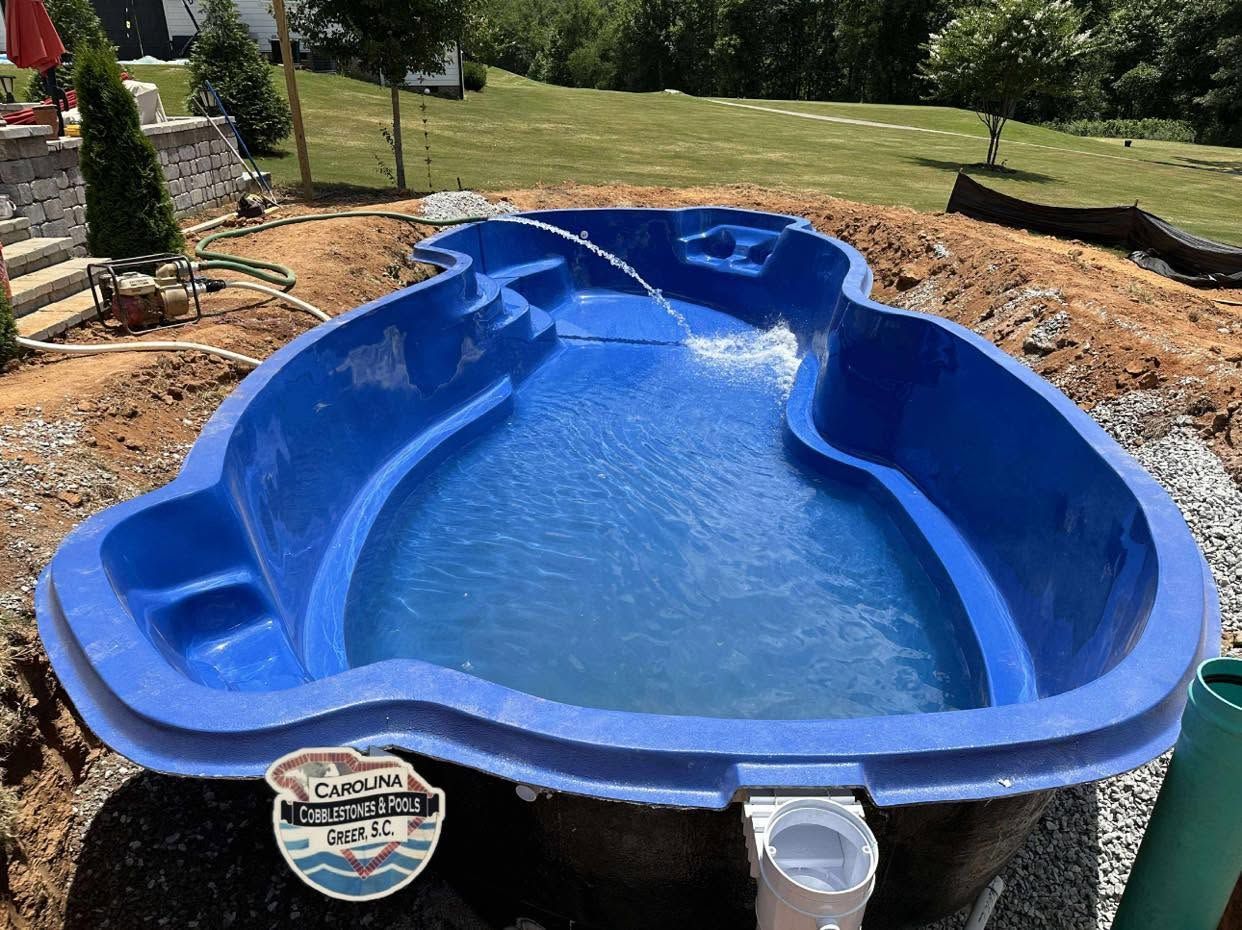
Installation requires excavating a hole sized to the shell dimensions, creating a stable base with sand or gravel, lowering the shell with crane equipment, leveling it precisely, then backfilling around the perimeter while filling the pool simultaneously to balance pressure on the walls. The process takes days rather than weeks, and the shell is ready for water immediately without curing periods.
Schedule a property evaluation to confirm your yard access can accommodate crane equipment and review available shell designs that fit your space.
What Changes After Installation Completes
Fiberglass shells come from the factory with the finished surface already applied, so color and texture remain consistent across the entire pool interior without seams, joints, or overlap marks. The non-porous gel-coat prevents algae spores from embedding in surface irregularities, meaning you spend less time brushing walls and use fewer chemicals to maintain water clarity. Shells include molded steps, bench seating, and entry configurations as part of the structure rather than added components.
Once the installation finishes, you notice smooth surfaces that feel slick underfoot, uniform color without the mottling that develops in concrete as minerals leach through over time, and integrated features that appear seamless because they were formed as part of the original shell. The flexibility of fiberglass means the shell can handle minor ground movement without cracking, an advantage in areas where soil conditions shift with moisture changes common in South Carolina clay soils.
Design options are limited to shapes available from manufacturers, typically offering rectangles, kidney shapes, and freeform designs in sizes up to about sixteen feet wide and forty feet long due to transportation restrictions. Custom shapes, beach entries, zero-depth wading areas, and integrated spa sections are only available if a manufacturer produces a shell with those features, unlike concrete pools where any configuration can be built on-site.
Answers to Frequent Service Questions
Homeowners evaluating fiberglass installation typically ask about design flexibility, surface durability, and how the installation process affects yard disruption.
What design limitations apply to fiberglass pools?
You select from pre-manufactured shell shapes rather than creating fully custom designs. Width typically maxes out around sixteen feet due to highway transportation restrictions, and you cannot add features like swim-up bars or custom depth profiles unless the shell was manufactured with those elements already formed.
How does yard access affect fiberglass installation?
Crane equipment needs clear access to position the shell over the excavated hole, requiring removal of fence sections or gates wider than the shell dimensions. Properties with narrow side yards, low-hanging power lines, or large trees blocking crane positioning may not accommodate fiberglass installation without significant site modification.
What happens if the gel-coat surface gets damaged?
Minor scratches and scuffs can be buffed out or filled with gel-coat repair kits that match the original color. Deep gouges or cracks require professional repair where the damaged area is ground out, filled with new gel-coat material, and blended to match the surrounding surface, though perfect color matching becomes difficult as the original surface ages and fades.
How does the installation timeline compare to other pool types?
Fiberglass installation typically completes in one to two weeks once the shell arrives, compared to four to eight weeks for concrete pools that require forming, pouring, curing, and surface finishing. Weather delays affect excavation and backfilling but don't extend the timeline as dramatically as they do for concrete work.
Why do fiberglass pools require less chemical maintenance in Greer?
The non-porous surface prevents algae from rooting into microscopic surface pits, so walls stay cleaner with less brushing. You use less chlorine and fewer algaecides because spores wash away during normal filtration instead of establishing colonies that require aggressive treatment to eliminate.
Carolina Cobblestones & Pools coordinates shell delivery and installation timing based on your yard conditions and project schedule, ensuring equipment access is arranged before the shell ships. Request a site visit to measure access points and discuss which shell designs fit your available space and intended use.