
Driveways Built for Vehicle Weight and Drainage
Driveway Installation in Greer for properties replacing failing surfaces or adding new access routes
A driveway that cracks within two years or develops ruts under tires indicates base failure, inadequate material thickness, or drainage problems that weren't addressed during installation. Carolina Cobblestones & Pools constructs driveways in Greer using pavers, brick, travertine, or concrete selected for the traffic load, slope conditions, and aesthetic requirements of the property. Vehicle weight concentrates force differently than foot traffic, requiring deeper excavation, thicker base layers, and materials that distribute loads without cracking or displacing.
Proper driveway construction accounts for soil type, water runoff patterns, and whether the surface will handle daily commuter vehicles, trucks, or recreational vehicles with significantly higher axle weights. The material choice affects traction in wet conditions, how visible tire marks and oil stains become over time, and whether repairs involve replacing sections or resurfacing the entire driveway.
Arrange an on-site consultation to evaluate soil conditions and drainage requirements for your driveway project.
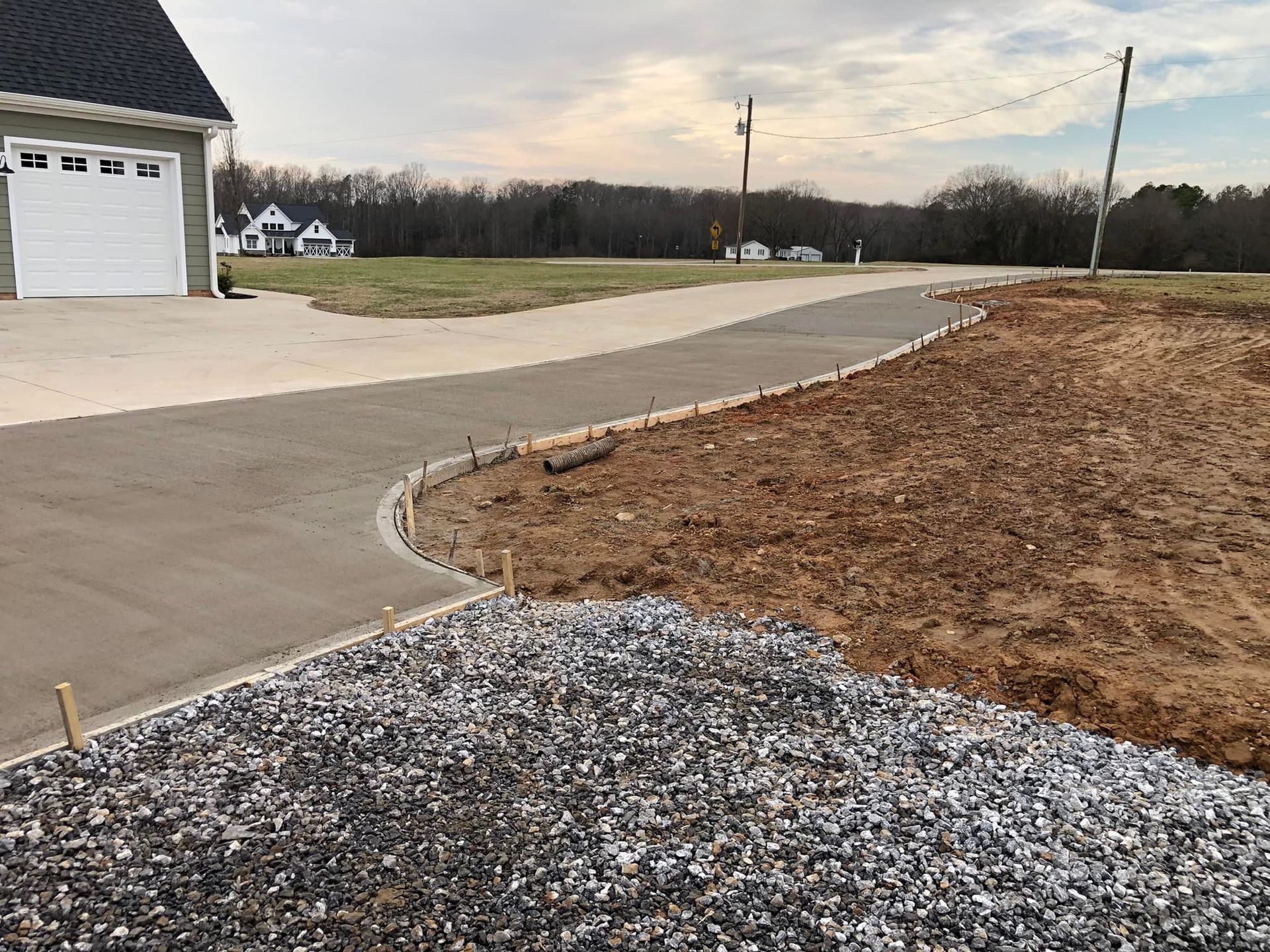
The Difference Between Durable and Failing Driveways
Installation begins with excavation to depth determined by soil conditions and expected vehicle loads—typically deeper than patio bases to handle concentrated wheel loads. The aggregate base goes down in compacted layers, with each lift tested for density before the next layer is added. Pavers and brick installations include edge restraints strong enough to resist the lateral forces from turning vehicles, while concrete pours require control joints cut at intervals to direct cracking to predetermined locations instead of random patterns across the slab.
After the installation cures and settles, your driveway supports vehicle weight without rocking pavers or developing ruts where tires repeatedly track. Water drains off the surface instead of pooling, and the slope directs runoff away from the garage or home foundation. Paver driveways allow for color and pattern variation that defines parking areas or borders, while concrete surfaces provide smooth travel with minimal maintenance beyond occasional sealing and crack monitoring.
Travertine driveways offer a high-end appearance but require sealing to resist staining from automotive fluids, and the natural stone stays cooler than dark asphalt or concrete in direct sun. Brick driveways provide a traditional look with dimensional texture, though joints require periodic maintenance to prevent weed growth and sand loss. Concrete remains the most cost-effective option for large driveways, with finishes ranging from broom texture for traction to exposed aggregate or stamped patterns for visual interest.
Questions Before Starting Your Project
Homeowners evaluating driveway options typically ask about material performance, installation timing, and what affects longevity under vehicle use.
What base depth is required for a driveway to support vehicles without settling?
Base depth depends on soil type and vehicle weight, but most residential driveways require at least six inches of compacted aggregate, with additional depth needed for clay soils or if the driveway will regularly support heavy trucks or RVs.
How do paver driveways hold up compared to poured concrete?
Pavers distribute loads across individual units and can be removed and reset if isolated settling occurs, making repairs less visible. Concrete provides a continuous surface that handles weight well when properly reinforced, but cracks are permanent and repairs involve cutting and patching that rarely blends seamlessly.
What drainage considerations affect driveway installation in Greer?
Clay-heavy soils common in the region hold water longer, requiring grading that moves runoff away from the driveway base to prevent softening and erosion. The surface slope must direct water toward drainage points without creating ponding areas where vehicles park or turn.
When is the best time to install a new driveway?
Fall and spring offer moderate temperatures that allow concrete to cure properly and give base materials time to settle before heavy use. Summer heat accelerates concrete curing and requires careful moisture management, while winter installations depend on temperatures staying above freezing during the curing period.
How do you prevent edges from crumbling or spreading under vehicle loads?
Paver and brick driveways use commercial-grade edge restraints anchored into the base to resist lateral movement when vehicles turn near borders. Concrete driveways require thickened edges or integrated curbing to distribute loads, and the base extends beyond the slab edge to support the perimeter.
Carolina Cobblestones & Pools handles excavation, base preparation, and material installation for driveways engineered to support vehicle traffic and drain properly through seasonal weather changes. Request an estimate to review material options and site-specific requirements for your driveway project in Greer.